grammy@cjm.com.cn

 English
 русский
 Español
 عربى
عربى
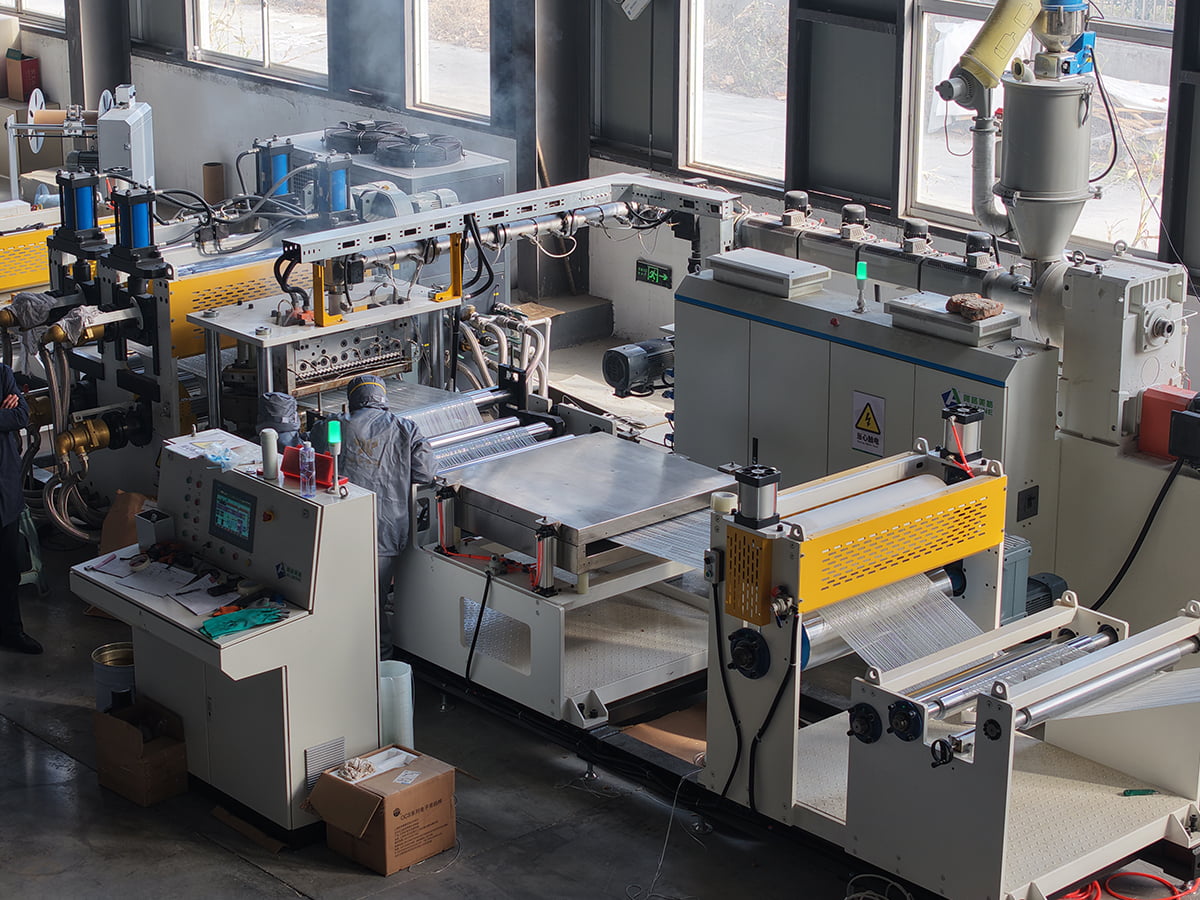

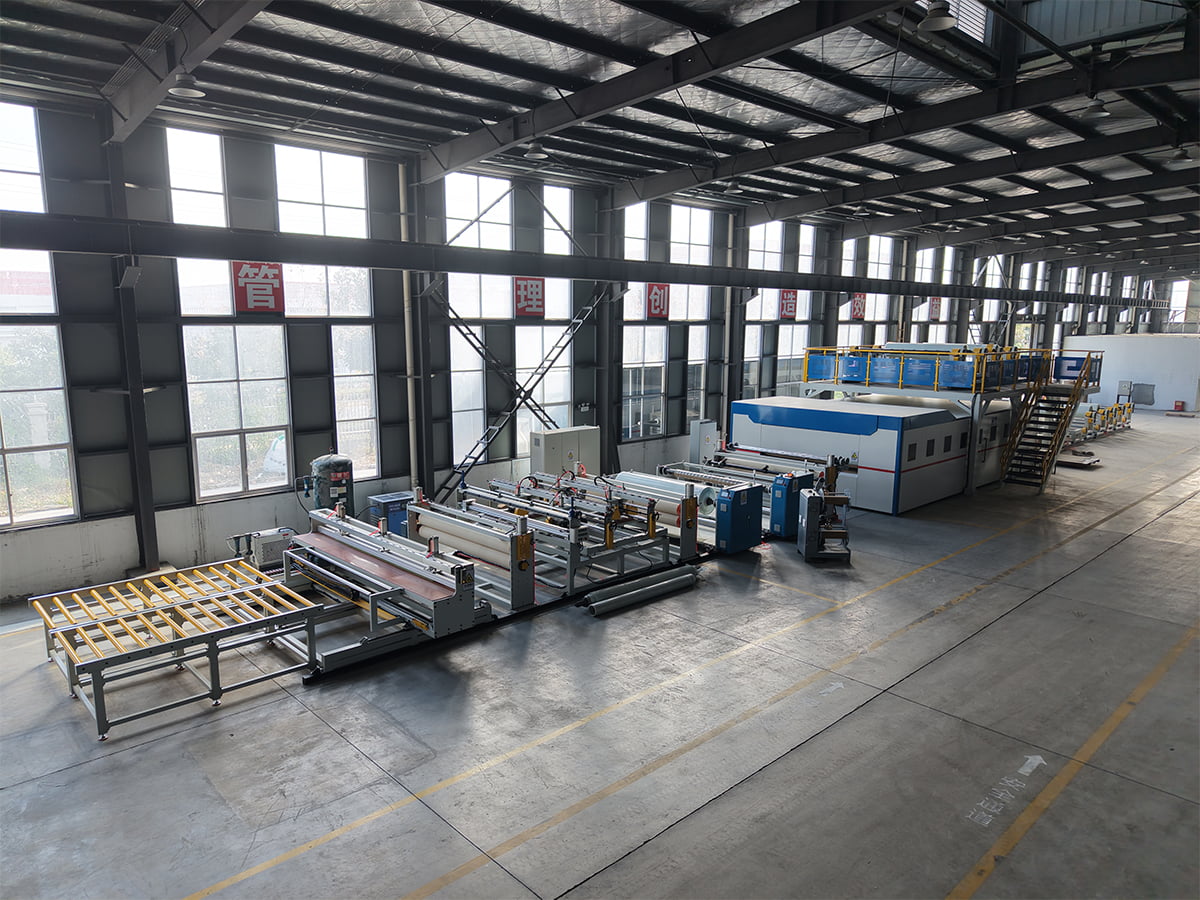
The CFRT Composite Material Production Line is specifically designed for manufacturing Continuous Fiber Reinforced Thermoplastic (CFRT) composite materials. CFRT materials combine the processability of thermoplastic plastics with the excellent mechanical properties of continuous fibers, making them an important material in industries such as aerospace, automotive, wind energy, and construction. The CFRT Composite Material Production Line efficiently combines continuous fibers (such as carbon fiber and glass fiber) with thermoplastic plastics (such as polypropylene and polyamide) to produce composite materials with high strength, lightweight properties, high-temperature resistance, corrosion resistance, and other excellent performances.
The unique advantages of CFRT materials make them particularly valuable in the manufacturing of high-strength, lightweight, and high-temperature-resistant components, especially with the increasing demand in automotive lightweighting and aerospace industries. The introduction of CFRT composite material production lines not only meets the growing demand for high-performance composite materials but also enhances production efficiency and reduces manufacturing costs.
Key Process Flow of CFRT Composite Material Production Line
The CFRT Composite Material Production Line ensures that the strength, toughness, high-temperature resistance, and overall performance of the material reach optimal levels through a series of precise process steps. The main processes include fiber laying, thermoplastic plastic melting, composite molding, and cooling and curing.
Fiber Laying and Impregnation
In the CFRT production process, continuous reinforcing fibers (such as carbon fibers or glass fibers) are evenly laid on the surface of the substrate by a laying system. Afterward, the fibers are impregnated with molten thermoplastic plastics through an impregnation device, ensuring that the fibers are fully penetrated and form a strong bond with the resin.
Thermoplastic Plastic Melting and Compounding
In the composite material production process, thermoplastic plastics (such as polypropylene or polyamide) are heated to a molten state and then combined with the reinforcing fibers through a high-temperature and high-pressure system. This process ensures the uniform distribution of the plastic matrix, increases strength, and reduces the material's weight.
Cooling and Curing
After compounding, the material is rapidly cooled by a cooling system, which allows the material to solidify and maintain stable physical properties. The cooling process is critical to the material's final mechanical properties, ensuring that it possesses high strength and stability in actual applications.
Molding and Cutting
The composite material is processed into the desired shape through a continuous molding system. After molding, the material is cut to meet the required dimensions, ensuring accuracy and fulfilling custom customer requirements.
Advantages and Applications of CFRT Composite Materials
CFRT composite materials are widely applied in various industries due to their excellent performance, especially in fields that demand high material strength, low weight, and high-temperature resistance. Here are some of the main advantages of CFRT composite materials:
| Feature | Advantage |
| High Strength | The use of continuous fibers gives CFRT composite materials excellent tensile strength and impact resistance. |
| Lightweight | CFRT materials have extremely low density, significantly reducing weight, making them ideal for automotive and aerospace industries. |
| High-Temperature Resistance | The combination of thermoplastic resins and continuous fibers allows the material to withstand high-temperature environments, making it suitable for high-temperature applications. |
| Corrosion Resistance | CFRT materials are not easily corroded by chemicals, making them suitable for use in harsh environments. |
| Recyclability | Thermoplastic plastics are recyclable, meeting environmental requirements and being easy to reuse. |
Applications of CFRT Composite Materials
Automotive Industry
Due to the high strength and lightweight nature of CFRT composite materials, they are widely used in automotive body panels, chassis, seat frames, and other components. They help automobile manufacturers achieve lightweight designs, improving fuel efficiency and reducing emissions.
Aerospace
CFRT composite materials, with their high strength-to-weight ratio, have become important materials in the aerospace industry. Aircraft fuselages, wings, and other components are often made from CFRT materials to improve flight efficiency and reduce energy consumption.
Wind Energy Industry
CFRT composite materials are widely used in the manufacturing of wind turbine blades. Their high strength, fatigue resistance, and high-temperature resistance make them ideal materials for wind turbine blade production.
Construction and Infrastructure
CFRT composite materials can be used in construction structures and infrastructure, particularly in applications where high strength and corrosion resistance are required, such as in bridges and building facades.
Electronics and Electrical Industry
In electronics and electrical equipment, CFRT materials are used for enclosures and structural supports, providing excellent mechanical properties and thermal stability.
Frequently Asked Questions (FAQ)
What is the difference between CFRT composite materials and traditional composites?
CFRT composite materials differ from traditional composites (such as SMC/BMC) in that they use continuous fibers as reinforcement. This gives CFRT materials higher strength and toughness. Additionally, since CFRT uses thermoplastic plastics, it offers good recyclability and processing performance.
How efficient is the CFRT Composite Material Production Line?
The CFRT composite material production line uses a continuous production process, allowing for large-scale production with high efficiency. The specific production efficiency depends on the degree of automation of the equipment. Typically, several hundred meters of composite material strips can be produced per hour, meeting the high-precision custom requirements.
How environmentally friendly are CFRT composite materials?
Because CFRT composite materials use thermoplastic plastic matrices, they have good recyclability. Waste materials produced during the production process can also be recycled, reducing environmental impact and meeting modern manufacturing industry's environmental requirements.
What is the cost of CFRT composite materials?
Compared to traditional metal materials, CFRT composite materials have higher raw material costs. However, due to their lightweight nature, they significantly reduce transportation and energy consumption costs. Therefore, they offer high cost-performance in long-term use, especially in high-end manufacturing fields.
The CFRT Composite Material Production Line uses advanced technology to combine continuous fibers with thermoplastic plastics, producing high-performance materials with high strength, lightweight, high-temperature resistance, and other exceptional properties. As demand continues to grow in industries such as automotive lightweighting, aerospace, and renewable energy, CFRT composite materials will play an increasingly important role in future development. By continually optimizing production line technology, the CFRT composite material production line not only improves production efficiency but also reduces costs, making CFRT composite materials more widely used and popular across various industries.