grammy@cjm.com.cn

 English
 русский
 Español
 عربى
عربى
Content
- 1 The Two Production Methods: Dry Process vs. Wet Process
- 2 Core Equipment Stations in a Dry-Process PU Leather Line
- 3 Surface Treatment and Finishing Stations
- 4 Winding, Inspection, and Quality Control Systems
- 5 Key Equipment Specifications for a Complete PU Leather Production Line
- 6 Wet-Process Line Configuration: Key Differences in Equipment
- 7 Raw Materials and Their Role in Production Line Design
- 8 Line Automation, Control Systems, and Industry 4.0 Integration
- 9 Environmental Systems: VOC Control, Solvent Recovery, and Wastewater Treatment
- 10 Factors That Determine Production Line Specification and Investment Scale
PU leather production lines are manufactured by integrating a sequence of specialized machines — coating stations, drying ovens, laminating units, embossing presses, and winding systems — into a continuous inline process that transforms a fabric or non-woven substrate into a finished polyurethane synthetic leather product. The core manufacturing sequence involves applying one or more layers of polyurethane resin to a base substrate, curing the coating in temperature-controlled ovens, laminating additional layers where required, and then applying surface treatments such as embossing, printing, or finishing to achieve the desired aesthetic and functional properties. Production lines are engineered as integrated systems rather than individual machines, with the entire line designed around the specific product range, output speed, and coating method required by the manufacturer.
There are two primary manufacturing processes used in PU leather production: the dry process (also called the transfer coating method) and the wet process (also called the direct coating or coagulation method). Each requires a differently configured production line with distinct equipment, oven configurations, and chemical processing systems. Most modern PU leather plants operate either one type of line exclusively or install separate lines for each process to serve different product segments. Understanding how these production lines are built and what each major component does is essential for anyone evaluating line specifications, designing a production facility, or assessing the quality potential of a given manufacturing setup.
The Two Production Methods: Dry Process vs. Wet Process
Before examining the individual components of a PU leather production line, it is important to understand the two fundamentally different manufacturing approaches, as they drive entirely different equipment configurations.
Dry Process (Transfer Coating Method)
In the dry process, PU resin is first coated onto a silicone release paper or release film, which carries the surface texture and pattern that will be transferred to the final leather product. The coated release paper passes through a drying oven where the solvent evaporates and the PU film solidifies. An adhesive layer is then applied over the cured PU film, and the fabric or non-woven substrate is laminated onto the adhesive under pressure. After curing, the release paper is peeled away, transferring the PU surface — complete with the embossed texture from the release paper — to the fabric substrate. The release paper is rewound for reuse over many production cycles.
The dry process is used for the majority of high-quality fashion PU leather for footwear, handbags, furniture upholstery, and automotive interiors. It allows precise control over surface appearance, layer thickness, and texture. A standard dry-process PU leather line operates at speeds of 8 to 25 meters per minute, depending on coating thickness and oven length.
Wet Process (Coagulation Method)
In the wet process, PU resin dissolved in dimethylformamide (DMF) solvent is coated directly onto a fabric substrate and then passed through a water bath containing a DMF-water mixture. As the coated fabric passes through the bath, water displaces the DMF in the coating, causing the PU to coagulate into a porous, sponge-like microstructure with a texture resembling genuine leather's internal grain structure. The fabric then passes through water washing tanks to remove residual DMF, followed by drying ovens to remove water, and finally through a surface treatment stage.
The wet process produces PU leather with superior breathability, softness, and a more natural leather-like hand feel — making it preferred for high-end footwear linings, sports gloves, and certain furniture applications. However, it requires extensive DMF recovery systems for environmental compliance, making the wet-process line significantly more complex and capital-intensive than a dry-process equivalent. Wet-process lines require DMF recovery units capable of reclaiming over 95% of DMF used to meet environmental discharge standards in most manufacturing jurisdictions.
| Characteristic | Dry Process (Transfer Coating) | Wet Process (Coagulation) |
|---|---|---|
| Coating substrate | Release paper / release film | Directly onto fabric |
| PU microstructure | Dense, solid film layers | Porous, open-cell structure |
| Breathability | Lower | Higher — closer to genuine leather |
| Surface texture control | Excellent — from release paper pattern | Applied by separate embossing stage |
| Environmental complexity | Moderate — solvent oven exhaust treatment | High — DMF recovery system required |
| Line speed | 8 – 25 m/min | 5 – 15 m/min |
| Primary applications | Fashion, footwear uppers, furniture, automotive | Footwear linings, sports goods, premium upholstery |
Core Equipment Stations in a Dry-Process PU Leather Line
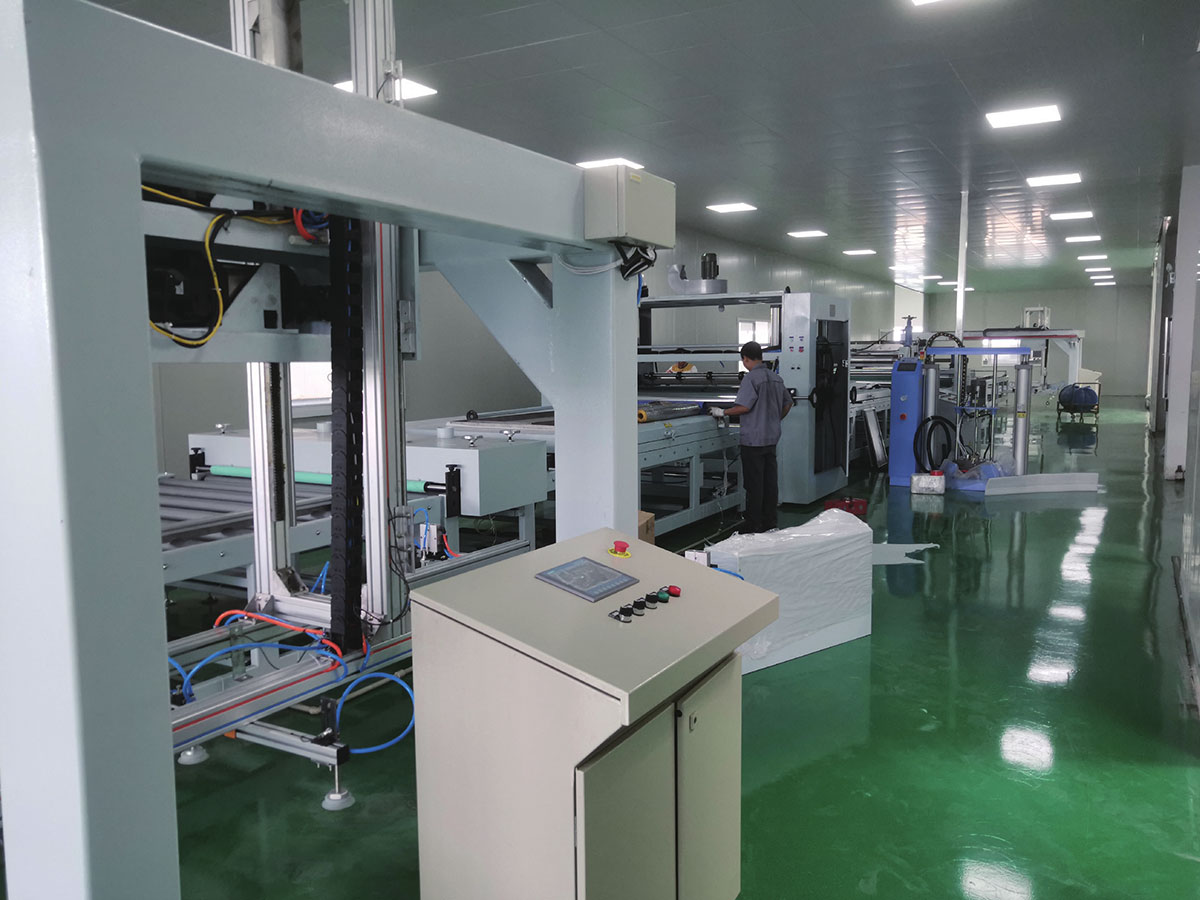
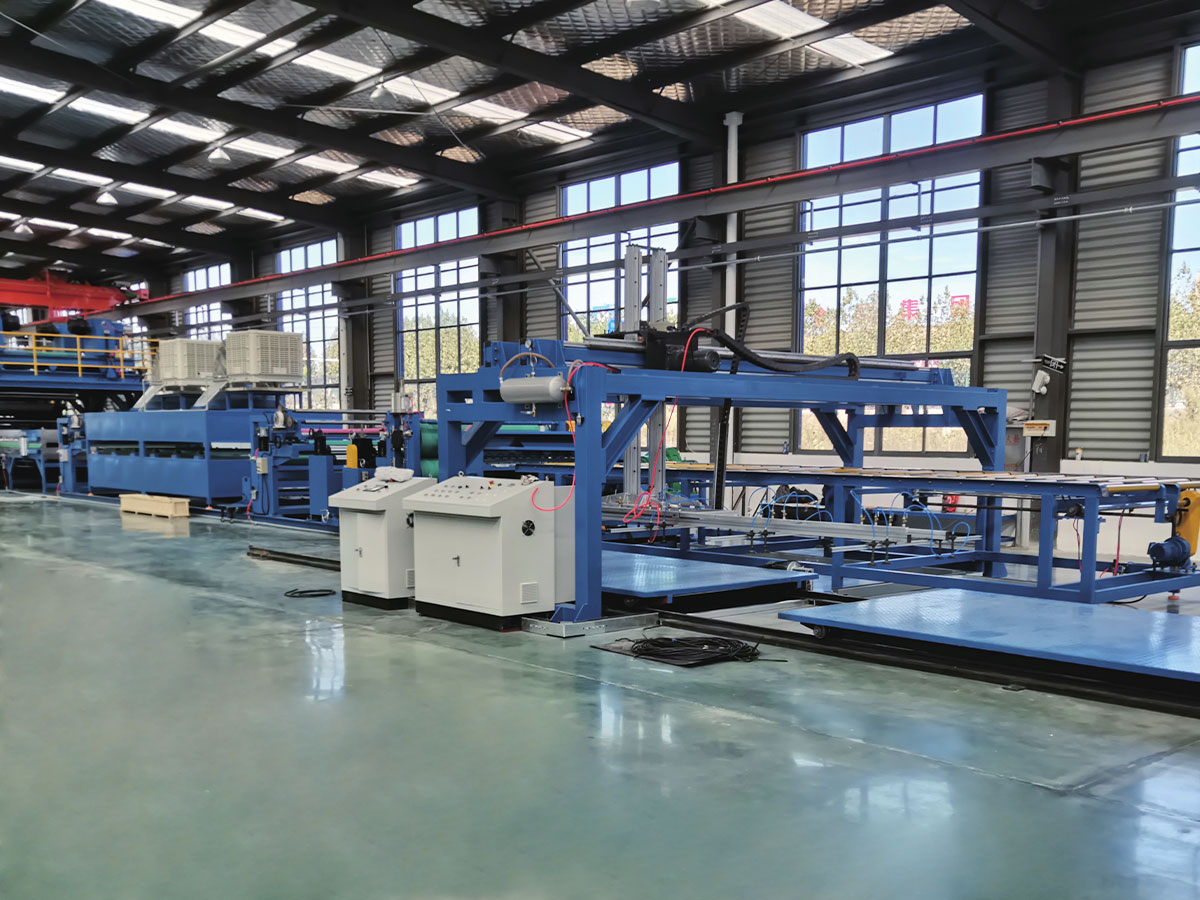
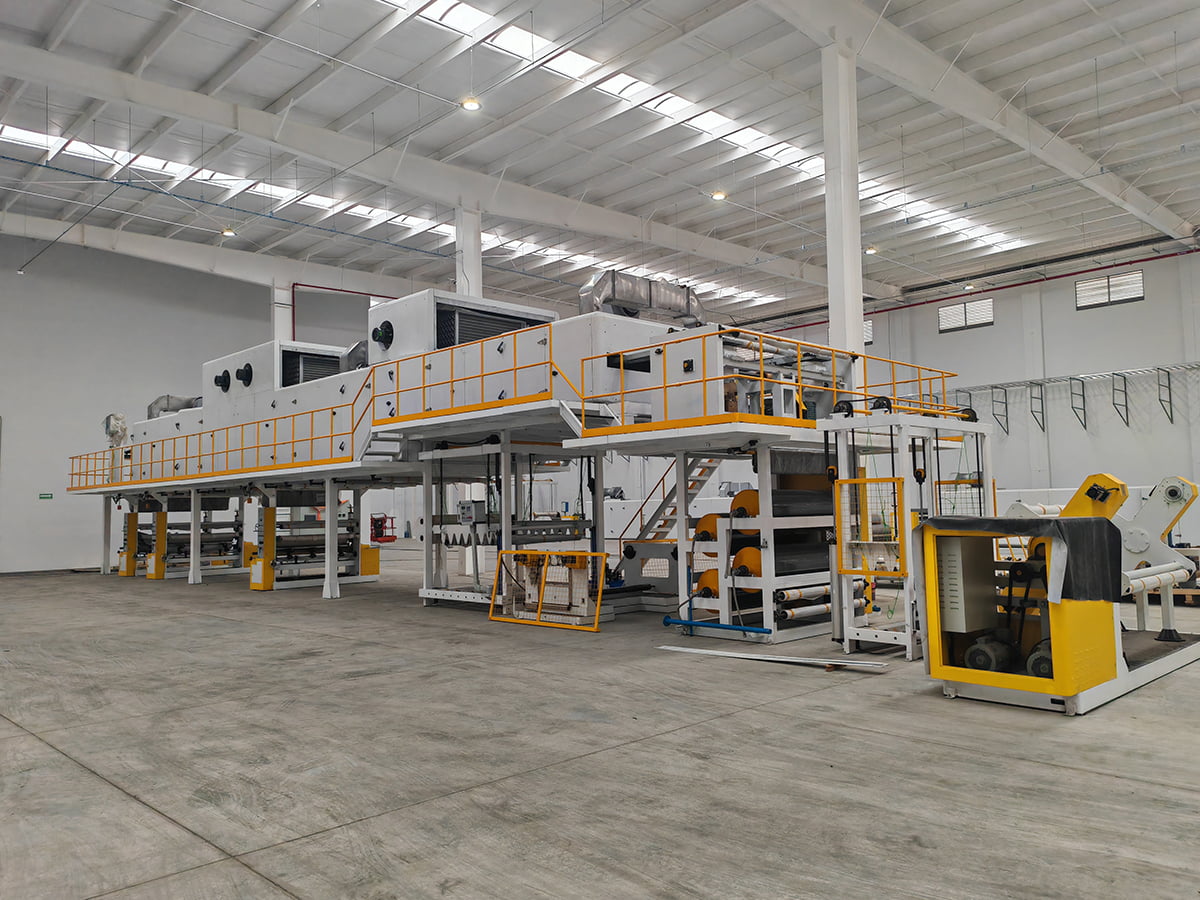
A complete dry-process PU leather production line integrates multiple specialized stations into a single continuous production flow. The line typically extends 60 to 150 meters in total length depending on the number of coating stations, oven length, and optional finishing units included. Each station performs a specific function that builds the final product layer by layer.
Release Paper Unwinding Station
The production sequence begins at the release paper unwind stand, where large rolls of silicone-coated release paper — typically 500 to 2,000 meters per roll — are loaded and unwound at controlled tension onto the main production path. The release paper provides the surface texture for the finished PU leather: different release papers carry different embossed grain patterns (natural grain, pebble grain, smooth, crocodile, etc.) that are permanently transferred to the PU surface during the coating and lamination process. The unwind station incorporates a tension control system to maintain constant release paper tension as roll diameter decreases during unwinding, preventing wrinkles or misregistration that would cause surface defects on the finished leather.
First Coating Station (Surface Layer / Top Coat)
The release paper passes under the first coating head, where a precise thickness of polyurethane resin — the surface coat — is applied. The coating head is typically a comma-bar coater (also called a knife-over-roll coater) or a gravure roll coater, depending on the viscosity of the PU formulation and the thickness uniformity required. The comma bar geometry produces a uniform, controlled film thickness by maintaining a precise gap between the coating bar and the release paper surface. Surface coat thickness is typically 0.05 to 0.15 mm, applied in a single pass from a PU resin formulation specifically engineered for surface hardness, chemical resistance, and colorability. The resin contains colorant, cross-linking agents, and functional additives (UV stabilizers, anti-scratch agents, anti-mold compounds) blended prior to coating.
First Drying Oven
After the first coating station, the coated release paper enters the first drying oven — a multi-zone forced-air oven that removes the solvent (typically DMF, MEK, toluene, or water-based solvent depending on the resin system) and cures the PU film. The oven is divided into temperature zones — typically three to five zones ranging from 80°C to 150°C — that progressively increase in temperature from the inlet to the outlet. This graduated temperature profile is critical: if temperature rises too rapidly, the solvent trapped inside the wet coating boils and creates bubbles or pinholes in the cured film. The oven length is calculated based on line speed and the time required for complete solvent evaporation and film formation — a typical first-oven length is 15 to 30 meters. Solvent-laden exhaust air from the oven is collected and treated through a solvent recovery unit or catalytic oxidizer before discharge to atmosphere, in compliance with VOC emission regulations.
Second (and Optional Third) Coating Station — Middle Layer
After the first oven, the cured surface layer returns to ambient temperature through a cooling section and then passes under a second coating head where a middle layer of PU resin is applied — typically a foamed or softer formulation that contributes bulk, softness, and body to the finished leather. Some production lines include a third coating station for a second middle layer or an adhesive foaming layer. The middle coat is usually thicker than the surface coat, typically 0.1 to 0.3 mm per layer, and may incorporate mechanical or chemical foaming to create a cellular structure that improves the cushioning and tactile properties of the finished product. Each additional coating station is followed by its own drying oven of appropriate length and temperature profile.
Adhesive Coating Station
Before the fabric substrate is bonded to the PU layers on the release paper, an adhesive coat is applied — either to the back of the PU film stack or to the fabric surface, depending on the process design. The adhesive is a PU-based bonding resin formulated for compatibility with both the PU coating and the fabric substrate. It must be applied at a precise and uniform thickness — typically 0.02 to 0.08 mm — and partially cured (to a tacky rather than fully set state) in a short drying section so that it retains sufficient tack to bond strongly when lamination pressure is applied. Adhesive coating station design is critical for peel strength consistency — adhesive coat weight variation is a leading cause of delamination failure in finished PU leather.
Fabric Substrate Lamination Station
The fabric or non-woven substrate — unwound from a separate fabric unwind stand — is brought into contact with the adhesive-coated PU film stack at the lamination station. A pair of laminating rollers applies controlled pressure to bond the fabric firmly to the PU film. The nip pressure, roll temperature, and line speed at this point are critical parameters that determine bond strength, surface smoothness, and dimensional stability of the finished material. Laminating roller pressures typically range from 0.2 to 0.8 MPa, depending on fabric weight and thickness, and roller surfaces may be heated to 80–120°C to assist adhesive activation. The combined composite — release paper / PU layers / adhesive / fabric — continues through a post-lamination oven for final adhesive curing before the release paper is separated.
Release Paper Separation and Rewinding
After the adhesive is fully cured, the composite passes around a separation roller where the release paper is peeled away from the PU leather surface. This separation reveals the finished PU surface — with the texture, gloss level, and color determined by the release paper and the PU resin formulations applied — for the first time. The release paper is rewound onto a spool for reuse on subsequent production runs; high-quality silicone release papers can typically be reused 20 to 80 times before the release coating degrades and the paper must be replaced. The now-exposed PU leather — substrate-backed and with the finished surface facing upward — continues to the surface treatment and finishing section of the line.
Surface Treatment and Finishing Stations
After the PU film is transferred from the release paper to the fabric substrate, the base PU leather passes through a series of surface treatment stations that apply the final color, texture, gloss, and functional properties. These finishing operations transform the base composite into a market-ready PU leather with the specific appearance and performance characteristics demanded by the end application.
Surface Printing and Color Correction
Gravure printing rollers or flexographic printing stations apply surface color coats, decorative patterns, or color-correcting layers to the PU surface. Gravure printing allows precise, repeatable color application in thin layers — typically 5 to 30 microns per color pass — and is capable of reproducing complex patterns, wood grains, stone effects, or abstract designs on the PU surface. Multi-color printing lines may incorporate three to six printing stations in sequence, with a short drying or UV-curing section between each to prevent color bleeding.
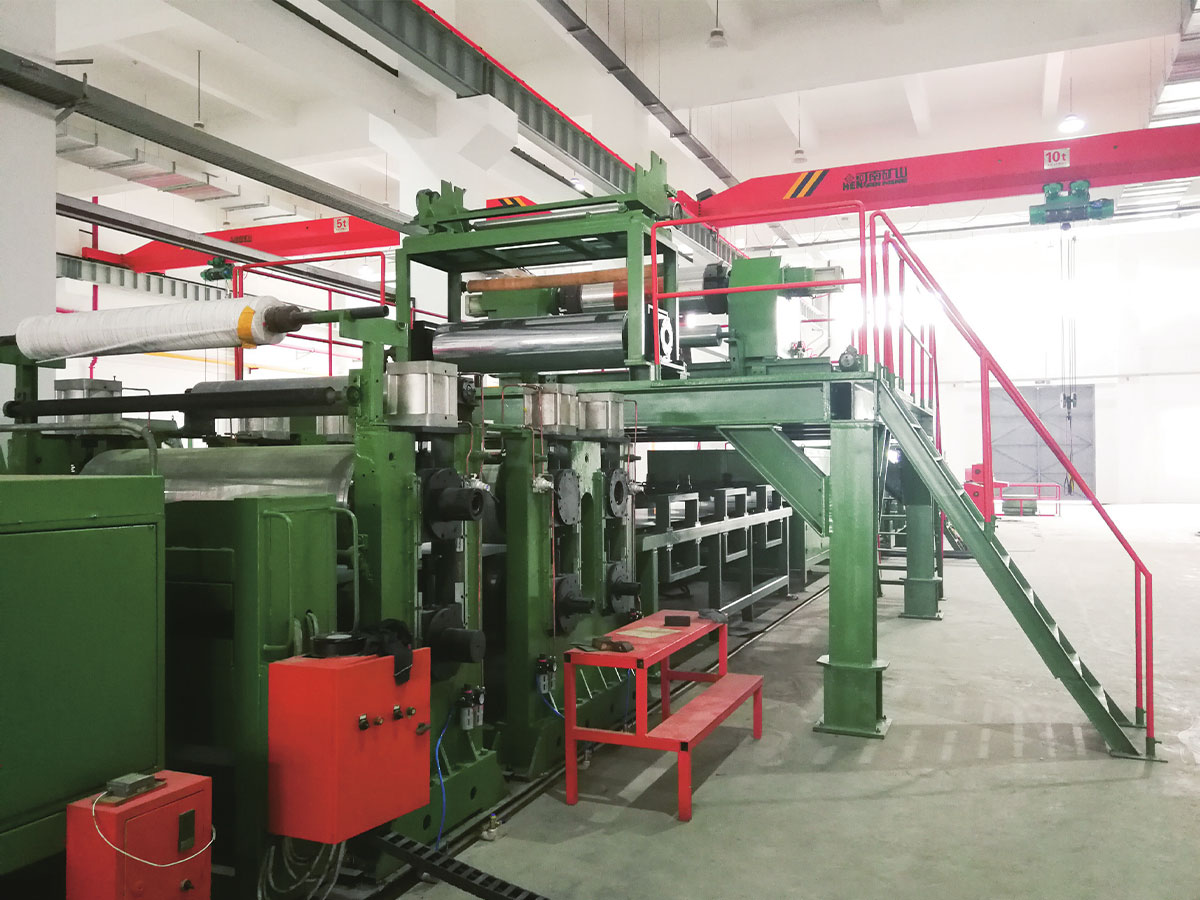
Embossing Press
For PU leather that requires a specific three-dimensional surface texture — grain pattern, cross-hatch, perforations, or other surface geometry — an embossing station is incorporated into the line. The embossing press consists of a heated embossing roller (or flat press for some applications) engraved with the desired surface pattern, which presses the heated PU surface to impart the texture permanently. Embossing roller temperatures typically range from 100°C to 180°C, with the precise temperature determined by the softening point of the specific PU formulation used. For PU leather produced by the dry process, embossing is sometimes used to reinforce or sharpen the texture already transferred from the release paper, or to create a completely different texture on the product surface by overriding the release paper pattern.
Top Coat and Surface Finishing Application
The final surface treatment station applies a top coat — a thin, highly durable PU or waterborne polyurethane formulation that protects the underlying print and color layers and determines the final surface gloss level (matte, semi-gloss, or high gloss). The top coat may also incorporate functional additives such as anti-scratch compounds, hydrophobic agents, anti-fog coatings for automotive applications, or antimicrobial treatments for healthcare or sporting goods applications. Top coat application is typically by gravure roller or spray coating, with a dry film thickness of 5 to 20 microns — thin enough to preserve surface texture clarity while providing durable surface protection.
Cooling and Conditioning Section
After passing through the final oven section of the finishing line, the PU leather must be cooled to ambient temperature before winding. A cooling section — either a series of water-cooled rollers or an air-cooling tunnel — rapidly reduces the material temperature from 80–140°C to below 40°C. This cooling step is not merely a practical convenience — it is essential for dimensional stability. PU leather wound while still hot will develop permanent set deformation as the material contracts during cooling in the roll, causing surface distortion, tension variation, and difficulty in downstream conversion operations such as cutting and laminating.
Winding, Inspection, and Quality Control Systems
At the end of the production line, the finished PU leather is inspected, measured, and wound into rolls for shipping or further conversion. The winding and inspection systems integrated into a modern PU leather production line are significantly more sophisticated than simple take-up winders.
Online Defect Detection Systems
High-speed camera systems mounted above the production path continuously scan the full width of the moving PU leather surface for defects — pinholes, coating skips, color variations, surface contamination, emboss failures, or lamination bubbles. The camera system processes images at line speed using automated image analysis software that compares each frame against reference quality standards, flagging and marking any defective zone with an ink jet or adhesive label. This automatic inspection allows the winding operator to cut out defective sections or segregate sub-quality rolls without slowing the main production line. Modern optical inspection systems can detect surface defects as small as 0.5 mm in diameter at line speeds up to 30 meters per minute.
Thickness Measurement and Width Gauging
Inline thickness gauges — typically laser triangulation or beta-ray sensors — continuously measure the total thickness of the finished PU leather across its full width and record the data against position and time. This data is logged to the production management system and used to verify that coating thickness is within specification, to detect process drift requiring correction, and to generate traceability records for each production roll. Edge detection sensors simultaneously measure and record the finished width of each roll, ensuring conformance to customer specifications and enabling automatic warning if edge trim cutting is not functioning correctly.
Tension-Controlled Winding Station
The finished PU leather is wound onto cardboard or metal cores at a precisely controlled tension that decreases as roll diameter increases — a winding profile called taper tension control. Constant-tension winding would result in the inner layers of a large roll being wound tighter than the outer layers, creating internal stress gradients that cause the roll to telescope, collapse, or develop permanent tension marks during storage. Taper tension control ensures uniform winding stress throughout the roll, producing rolls that unwind cleanly and without distortion in downstream conversion processes. Finished PU leather rolls typically weigh 200 to 800 kg and contain 50 to 300 linear meters of material per roll depending on thickness and fabric weight.
Key Equipment Specifications for a Complete PU Leather Production Line
The following table summarizes the major equipment stations of a dry-process PU leather line, their primary specifications, and the critical parameters that determine product quality at each stage.
| Equipment Station | Function | Key Specification | Critical Quality Parameter |
|---|---|---|---|
| Release paper unwind | Feed release paper at controlled tension | Max roll diameter 1,200 mm; tension control ±2% | Tension uniformity — prevents surface wrinkles |
| Coating head (comma bar) | Apply PU resin at uniform thickness | Gap adjustment ±0.01 mm; width up to 2,000 mm | Coat weight uniformity — affects surface quality |
| Drying oven | Cure PU coating by solvent evaporation | 3–5 zones; 80–150°C; 15–30 m length | Temperature uniformity — prevents bubbles and pinholes |
| Fabric unwind and lamination | Bond fabric substrate to PU layers | Nip pressure 0.2–0.8 MPa; roller temp 80–120°C | Bond strength — determines peel resistance |
| Release paper separation | Peel release paper from cured PU surface | Controlled peel angle; paper rewind tension | Clean separation — prevents surface tearing |
| Embossing press | Imprint surface texture into PU | Roll temp 100–180°C; pressure adjustable | Temperature consistency — pattern depth uniformity |
| Gravure printing station | Apply color, pattern, decorative layers | 5–30 microns per pass; up to 6 color stations | Register accuracy — color alignment precision |
| Top coat station and oven | Apply protective surface finish | 5–20 micron dry film; gloss or matte finish | Uniform gloss — determines aesthetic consistency |
| Inspection and winding | Detect defects; wind finished product | Defect detection to 0.5 mm; taper tension winding | Roll quality — winding uniformity for conversion |
Wet-Process Line Configuration: Key Differences in Equipment
A wet-process PU leather production line shares some equipment concepts with the dry process — coating heads, drying ovens, winding systems — but includes several major additional components specific to the coagulation chemistry of the process.
Direct Coating Station onto Fabric
In the wet process, the coating head applies PU-DMF solution directly onto the moving fabric substrate — typically a non-woven polyester or nylon fabric. The coating viscosity is higher than in dry-process formulations, and the knife gap is set to achieve the final desired total coating thickness in a single pass — typically 0.3 to 1.5 mm total coating thickness for the wet-process layer, significantly thicker than individual dry-process layers.
Coagulation Bath System
The coated fabric immediately enters a coagulation bath — a tank filled with a mixture of DMF and water, maintained at a controlled concentration and temperature. As the coated fabric travels slowly through the bath, water diffuses into the PU coating while DMF diffuses out, triggering the coagulation (solidification) of the PU into its characteristic porous microstructure. The bath concentration — the ratio of DMF to water — is a critical process parameter: typical coagulation bath DMF concentrations range from 15% to 30%. Higher DMF concentration produces a finer, denser pore structure; lower concentration produces a coarser, more open structure. The fabric residence time in the coagulation bath is typically 5 to 15 minutes, requiring long bath tanks of 30 to 80 meters total length at typical line speeds.
Water Washing Tanks
After coagulation, the PU-coated fabric contains significant residual DMF within the pore structure — typically several percent by weight — that must be removed to produce a product that is chemically safe and compliant with environmental and product safety standards. The fabric passes through a series of counter-flow water washing tanks — typically four to eight tanks in series — that progressively dilute and wash out the DMF. The washing water from the tanks is collected and fed to the DMF recovery system. The washing section must reduce residual DMF in the finished PU leather to below 0.5% by weight to meet standard product quality requirements for most applications.
DMF Recovery and Environmental Treatment System
The washing water collected from the washing tanks contains DMF in dilute solution. Because DMF is both a valuable solvent and a substance regulated for environmental and worker health reasons, its recovery from the wash water is both an economic and regulatory necessity. A distillation-based DMF recovery system processes the wash water to separate DMF from water, recovering the DMF for reuse in resin preparation and discharging clean water in compliance with wastewater discharge standards. Modern wet-process PU leather lines achieve DMF recovery rates of 95% to 99% of the DMF originally applied, making the process economically viable despite the additional equipment investment required.
Drying and Surface Treatment
After washing, the PU-coated fabric passes through drying ovens to remove water from the porous PU structure. Wet-process drying requires lower temperatures than dry-process curing — typically 80°C to 120°C — because the porous PU structure has already formed and only moisture removal is needed rather than solvent cure. Following drying, the base wet-process PU leather undergoes surface treatment — buffing to even the surface, followed by the same printing, top-coating, and embossing stages used in the dry process, to achieve the required final appearance and performance.
Raw Materials and Their Role in Production Line Design
The raw materials processed on a PU leather production line are not passive inputs — their specific physical and chemical properties directly determine how the production line must be configured, what temperatures and tensions the equipment must handle, and what quality control systems are required. Understanding the key raw materials clarifies why production line specifications vary between manufacturers and product types.
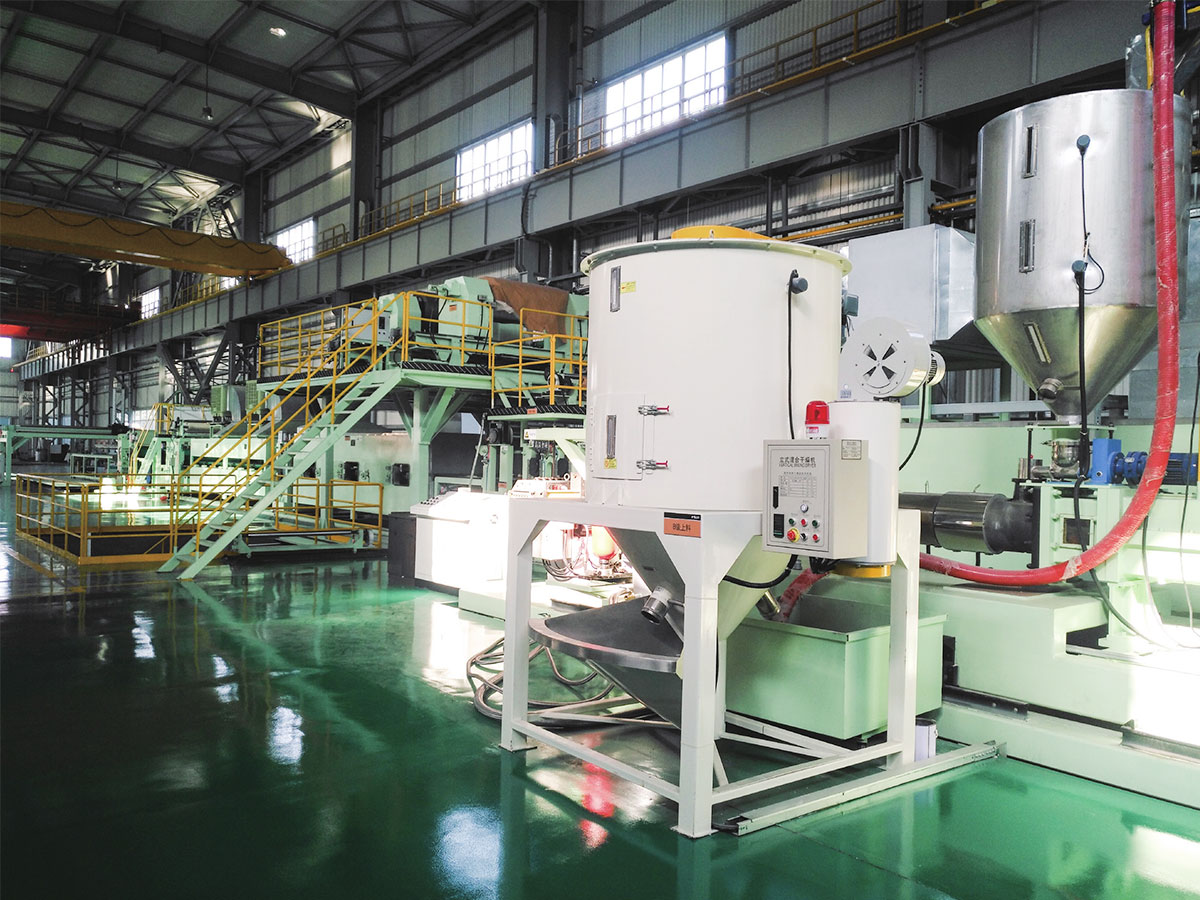
- Polyurethane resin: Available in solvent-based, water-based, and 100% solid formulations. Solvent-based PU offers the widest property range and remains dominant in conventional production lines. Water-based PU is increasingly used in environmentally oriented lines but requires different oven specifications (steam management, longer drying times) and produces somewhat different surface characteristics. The resin viscosity at application temperature determines the coating method — high-viscosity resins suit comma-bar coating; low-viscosity resins suit gravure roll application.
- Fabric substrate: Woven polyester, knitted polyester, non-woven polyester, or split microfiber non-woven fabrics are the principal substrate types. Each has different elongation, weight, and surface texture characteristics that affect tension control requirements on the production line. Heavy woven substrates require higher fabric unwind tension capability; stretch knit fabrics require floating-tension control systems to prevent distortion.
- Release paper: The release paper defines the surface texture and gloss of the dry-process PU leather. Papers are available in hundreds of pattern variants — natural grain, corrected grain, patent gloss, suede effect — with silicone release coatings of varying release force. The paper must maintain dimensional stability across the temperature range of the drying ovens, which limits the paper base material to heavyweight craft paper or polyester film substrates for high-temperature applications.
- Colorants and additives: PU resin is pigmented using polymer-compatible colorants dispersed in carrier resins. The color system must be compatible with both the PU chemistry and the downstream top coat — color bleed from under-stabilized pigments into the top coat layer is a quality failure that can render entire production runs non-conforming. UV absorbers, antioxidants, anti-hydrolysis stabilizers, and flame retardants are added to meet product performance specifications for specific end markets.
Line Automation, Control Systems, and Industry 4.0 Integration
Modern PU leather production lines are highly automated systems in which the coordination of dozens of independently driven rollers, coating heads, oven zones, and monitoring instruments is managed by integrated PLC and SCADA control systems. The automation architecture of the production line is as important to production quality and efficiency as the mechanical equipment itself.
Tension Control Architecture
Tension management is the central control challenge on a PU leather line because the material changes its mechanical properties — stiffness, elongation, and density — as it is coated, dried, laminated, and treated at each station. Each section of the line must maintain the material web at a tension appropriate to its current state and process step, without over-stretching the substrate (which would cause length distortion of the finished product) or under-tensioning the web (which would cause wrinkles and tracking errors). A modern PU leather line uses zone-by-zone tension control with dancer rollers and load cells providing real-time tension feedback to the drive system, maintaining tension within ±3% of setpoint across all operating speeds and during acceleration and deceleration transients.
Oven Temperature Management
Each oven zone is independently controlled by a PID temperature controller with thermocouple feedback, maintaining the set temperature within ±2°C to ±5°C across the full oven width. Cross-oven temperature uniformity — the temperature difference between the center and edges of the oven at any given point along its length — is a critical specification because uneven drying produces uneven surface properties across the web width. High-performance ovens use nozzle geometries and air circulation designs specifically engineered to achieve cross-oven temperature uniformity of better than ±3°C across widths up to 2,000 mm.
Recipe Management and Production Traceability
The SCADA system stores production recipes — complete sets of process parameters for each product type — in a database accessible from the HMI. When production switches from one product to another, the operator selects the new recipe and the system automatically adjusts all process parameters to the new specification, including oven temperatures, coating head gaps, laminating roller pressure, embossing temperature, and winding tension profiles. All process parameters are continuously logged against time, roll identity, and production order, creating a complete traceability record for every meter of PU leather produced. This data supports quality management system requirements and allows rapid root-cause analysis when quality issues are reported by customers against specific production batches.
Environmental Systems: VOC Control, Solvent Recovery, and Wastewater Treatment
PU leather production involves significant quantities of solvents and process chemicals that must be managed in compliance with environmental regulations. Environmental systems are not peripheral additions to a PU leather line — they are integral components without which the line cannot operate legally in most manufacturing jurisdictions.
- Solvent exhaust collection and treatment (dry process): All drying ovens are ducted to a centralized exhaust collection system. Solvent-laden exhaust air is processed through either a solvent recovery unit (activated carbon adsorption with steam regeneration for MEK/toluene) or a catalytic oxidizer that converts VOCs to CO2 and water. VOC destruction efficiency of catalytic oxidizers typically exceeds 98%, bringing exhaust emissions well within regulatory limits.
- DMF recovery system (wet process): The distillation-based DMF recovery unit processes washing water to separate and concentrate DMF to a purity suitable for reuse in PU resin preparation — typically recovering DMF at greater than 99.5% purity from the distillation process. Residual DMF-contaminated condensate is recycled back to the washing tanks rather than discharged.
- Wastewater treatment (wet process): Water discharged from the DMF recovery process contains trace quantities of DMF and must be treated in an activated sludge biological treatment plant or advanced oxidation system before discharge. The treatment system must reduce DMF concentration in discharge water to below regulatory limits — typically below 3 mg/L DMF in final discharge in major manufacturing jurisdictions.
- Shift toward water-based PU systems: Growing regulatory pressure on solvent use and DMF in particular is driving adoption of water-based PU resin systems for dry-process lines. Water-based lines require reformulated resins, different oven designs (steam management becomes critical), and generally higher capital investment but eliminate the need for solvent recovery and significantly reduce VOC emissions. The transition is ongoing and is expected to become the dominant technology in PU leather production over the next decade.
Factors That Determine Production Line Specification and Investment Scale
The specification of a PU leather production line — and therefore its capital cost — varies significantly depending on the specific product range to be produced, the required output capacity, and the performance and quality standards that apply to the target market. The following factors drive the key specification decisions.
| Decision Factor | Lower-Specification Line | Higher-Specification Line | Implication |
|---|---|---|---|
| Working width | 1,000 – 1,300 mm | 1,600 – 2,000 mm | Wider line = higher output per meter run; higher capital |
| Number of coating stations | 2 (surface + adhesive) | 4–5 (surface + 2 middle + adhesive + top coat) | More stations = more product variety and performance range |
| Maximum line speed | 8 – 12 m/min | 20 – 30 m/min | Higher speed requires longer ovens and faster controls |
| Automation level | Semi-automatic; manual adjustment | Full PLC/SCADA; automatic recipe management | Higher automation = lower labor, better consistency |
| Inspection system | Manual visual inspection | Automated camera inspection system | Automated inspection = consistent defect detection |
| Environmental systems | Basic VOC oxidizer | Full solvent recovery + wastewater treatment | Higher spec enables compliance and solvent cost recovery |
A basic single-line dry-process PU leather system — one or two coating stations, moderate automation, narrower working width — can be installed for significantly less than a full premium line. A full-specification high-speed line with multiple coating stations, comprehensive automation, automated inspection, and complete environmental treatment systems represents a substantially larger investment but delivers the output capacity, product flexibility, and quality consistency required to compete in automotive, high-end fashion, and premium furniture markets where material quality standards are stringent and audit requirements from OEM customers are comprehensive.